
Jain cooking, explained
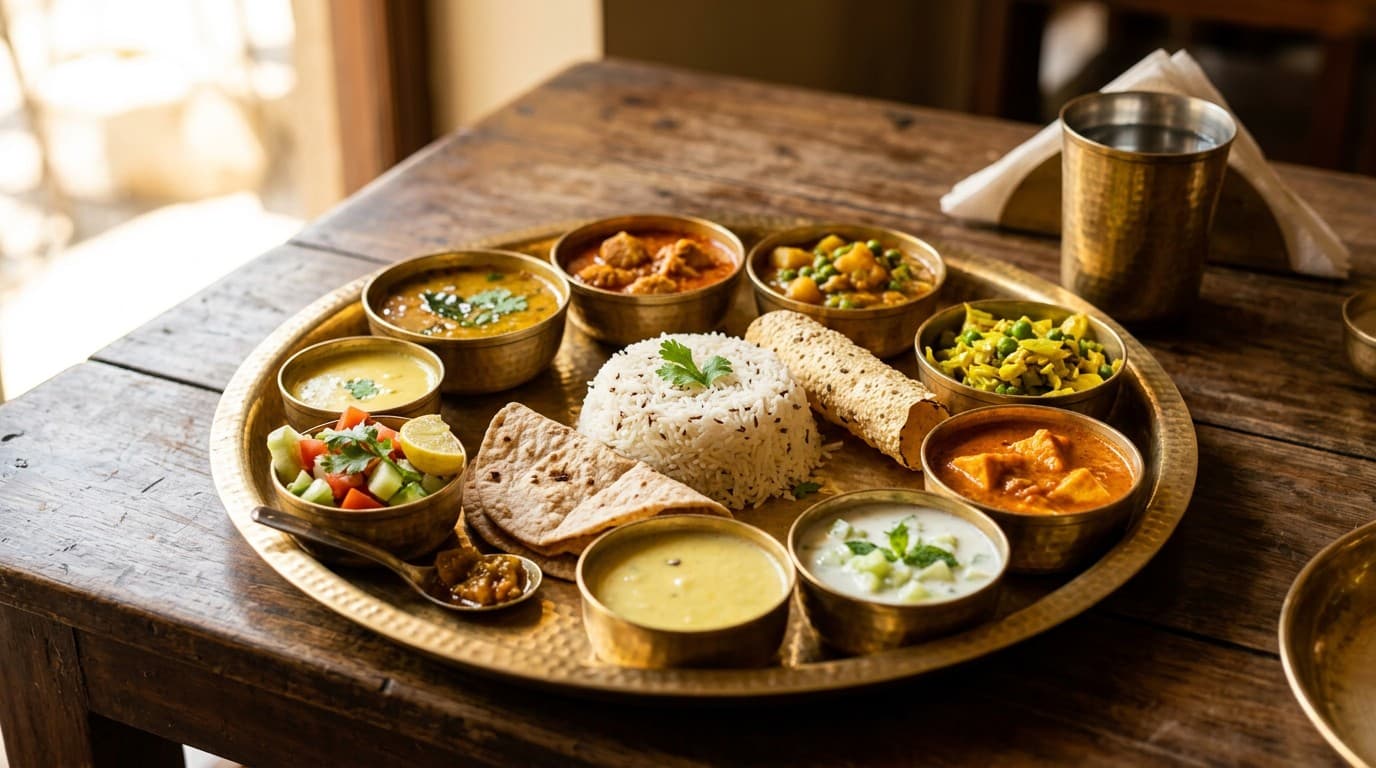
Jain cooking leaves out onion, garlic and anything that grows underground — and proves that flavour was never hiding there in the first place. For many first-timers, that sounds like cooking with one hand tied behind your back. It isn't.
What makes food Jain
Jain dietary principles are rooted in ahimsa — non-violence. Uprooting a whole plant to eat its root ends the plant's life and disturbs the many tiny organisms in the soil, so root and bulb vegetables are avoided.
- No onion or garlic
- No potato, carrot, beetroot, radish or other roots
- No ginger in its fresh root form (dry ginger is often used)
- Care taken to avoid harm to even the smallest living things
Where the flavour comes from instead
Take away onion and garlic and you lean harder on everything else — and the food gets more interesting, not less. Asafoetida (hing) brings a savoury, almost garlicky depth. Tomato, yoghurt and a careful hand with whole spices build body. Roasting, tempering (vaghaar) and fresh herbs do the rest.
- Asafoetida (hing) for savoury depth
- Tomato and yoghurt for richness and tang
- Whole-spice tempering — cumin, mustard, curry leaves
- Fresh coriander, green chilli and lemon to finish
Jain food at Thepla House by Tejal's Kitchen
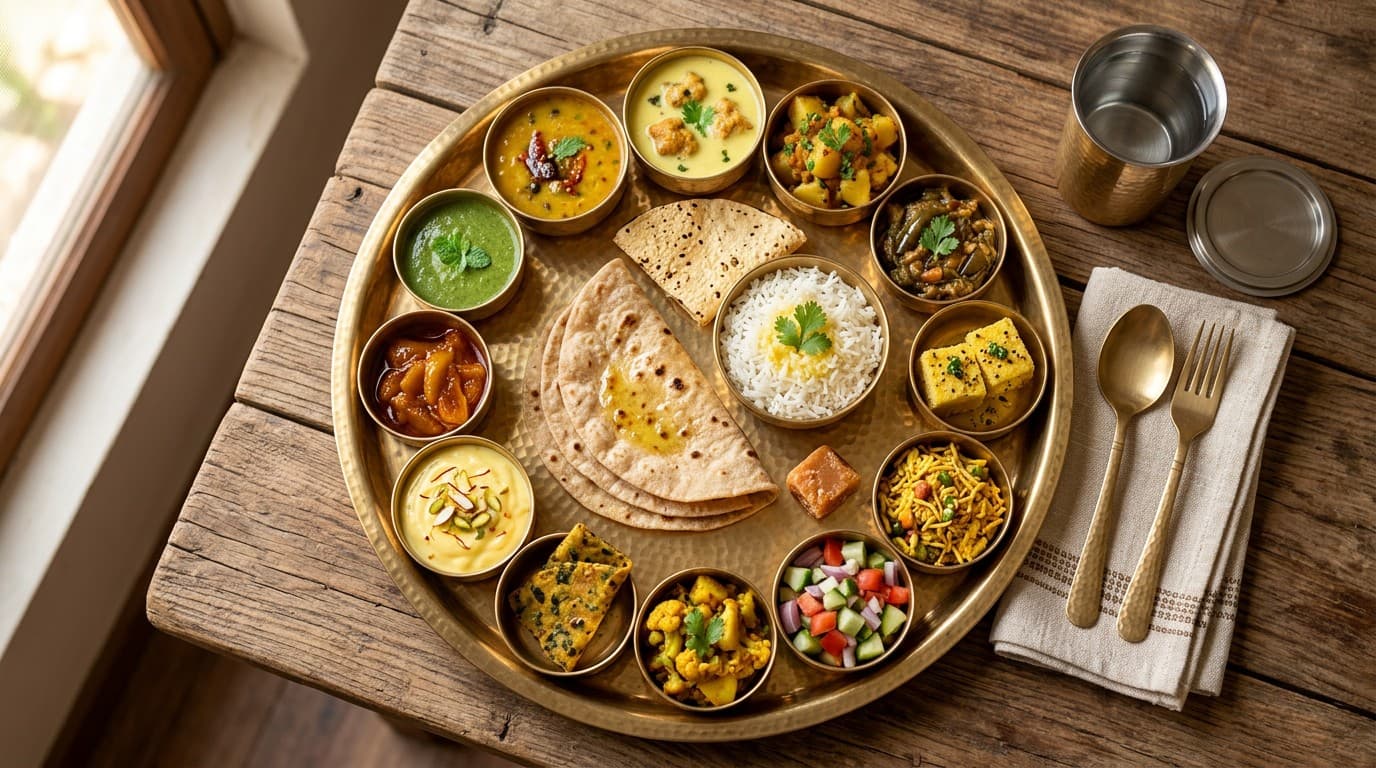
We cook full Jain menus every day — Jain thalis, Jain farsan and Jain sweets — all 100% vegetarian, whole wheat and free of palm oil and preservatives. Just ask when you order, and our kitchens also handle full Jain catering for poojas, festivals and functions across Mumbai.
Constraints don't dull a kitchen. They sharpen it.
 WhatsApp